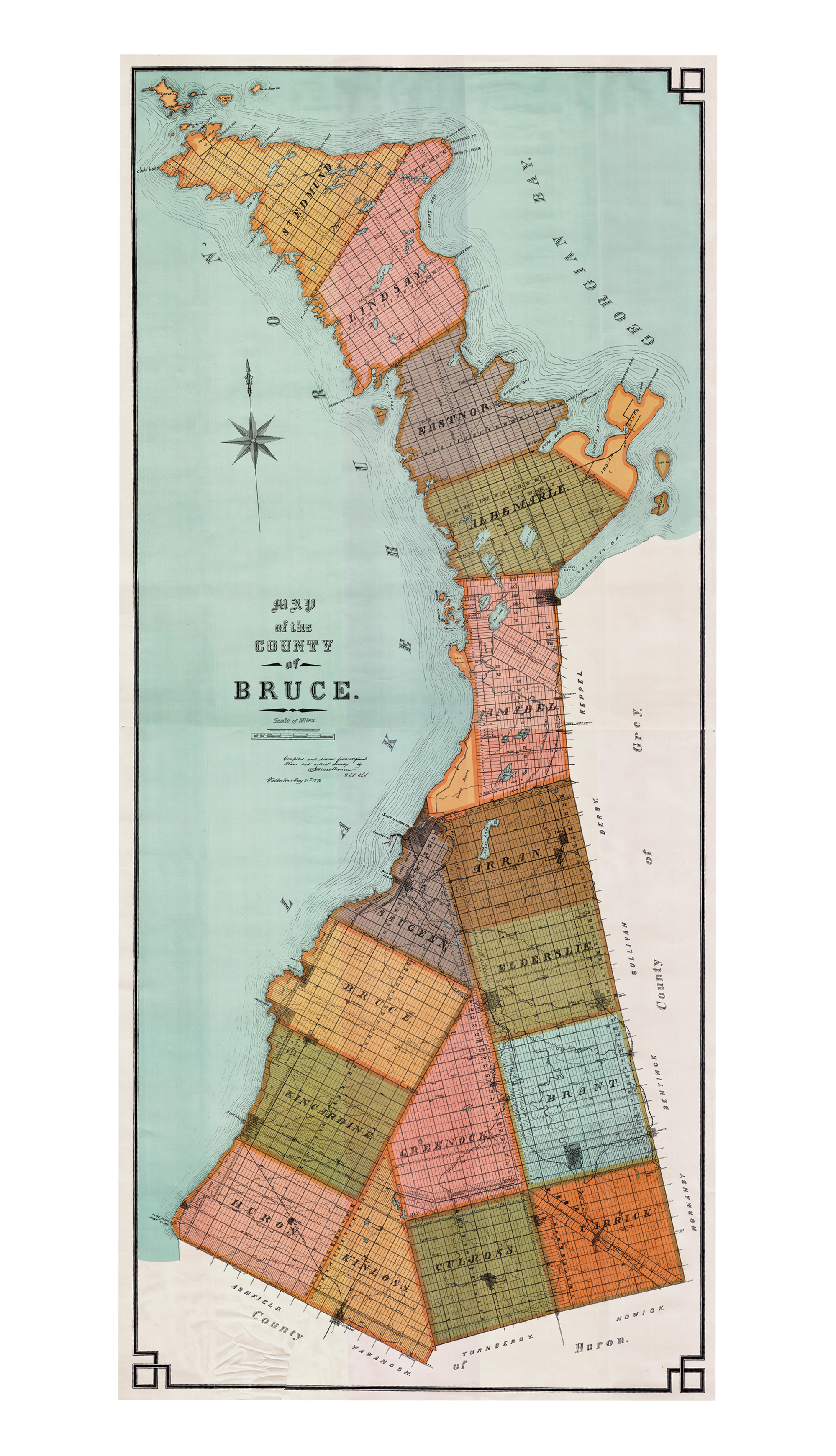
Have you wondered about the history behind the names of our community?
Town of South Bruce Peninsula is responsible for many villages and hamlets.
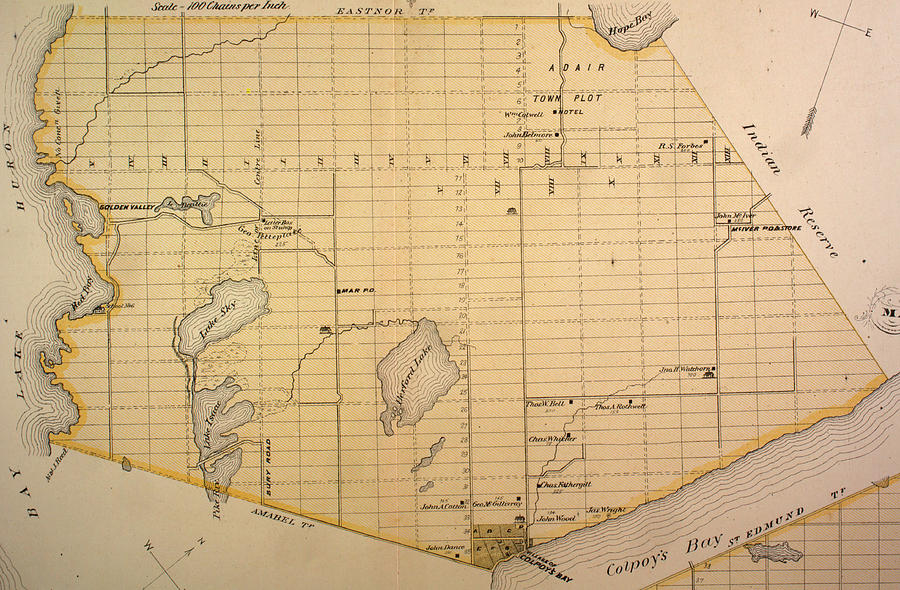
In old Albemarle Township, way back in the last century , we have:
Adamsville: Like many small farming communities, it was the postmasters or postmistresses who played the major role in determining what an area should be referred. Adamsville was named for the first postmaster who began his post in 1888. [Samuel Adams, that is.]
Colpoys Bay: Unfortunately for the postmaster Kribs, his name wasn’t chosen; it certainly doesn’t roll off the tongue. Admiral John Colpoys of the British Navy; a man with a long military career, serving in three wars, was the better namesake.
Hope Bay: Formerly Adair, this bay was named after Henry Hope, who was not only a Brigadier General but also a Lieutenant General of Quebec (which was more like a deputy than like today’s role.)
Howdenvale: This community was originally called “Howden Vale” , then briefly was known as “Golden Valley”. (Which I have discovered wasn’t chosen for the reason I thought of first: the sand). Then, back again. I had to do a little research. I found this from 2002: https://www.postalhistorycanada.net/php/StudyGroups/GreyBruce/Journal/GBDS_25.pdf
Mar: Ah! My enigma wrapped in a mystery! And a future trip to the Bruce County Museum!
Purple Valley: The home of Maple Syrup celebrations, it is also is a mystery. But purple IS my favourite colour…
Red Bay: The legend is that Red Bay is named for “bloody water”, referring to earlier history of the area. (According to The History of the County of Bruce 1907-1968 by Normal McLeod)
McIver: Named for early settlers. One of these famous sons was credited with a 25 mile skate on a frozen Georgian Bay to Owen Sound in 1904, which of course made the Wiarton Echo paper on February 13th, 1964!
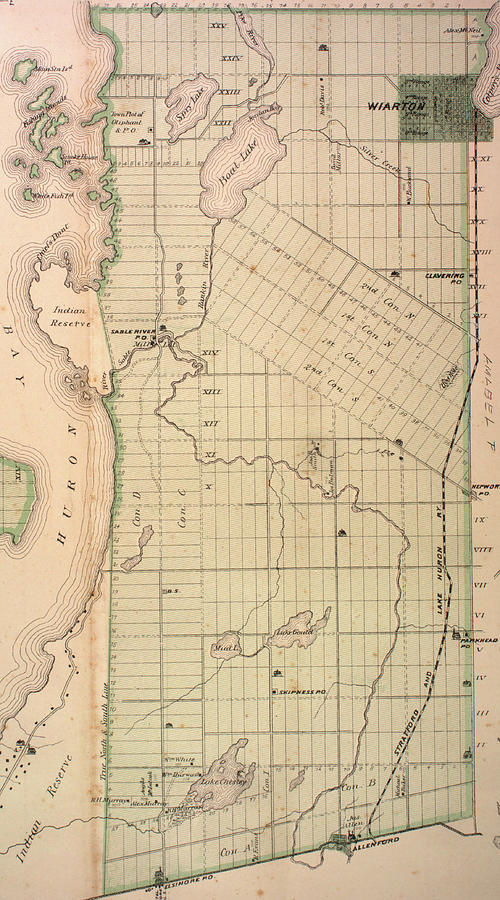
Communities of former Amabel Township
Allenford: Originally referred to as “Floodwood Crossing” or “Driftwood Crossing”, it later was renamed for James Allen, early settler and Indian agent. His Indian agent’s record book for the Cape Croker/Saugeen Agency is in the Canadian Archives.
Alvanley: This busy little corner has an interesting name that lets people know if you are from the area by the way you pronounce it. I don’t know the origins, but apparently there was a brief historical period when it was called “Aiken’s Corners”.
Clavering: Another example of a community named by the postmaster, Clavering was named after a village in Essex.
Elsinore: A postal inspector made the suggestion of this name because of a visit by the Royal Family to Denmark in 1865. To Elsinore.
Hepworth: A bit of an accent changed “Epworth” to “Hepworth”. Meant to be a nod to the early leaders of Methodism, born in this Kent village.
Oliphant: A Scottish name reference for Clan Oliphant or Olyphant. Interesting little note: on the shield of this group, there is an elephant tusk. Not many elephants are found in Scotland, but there you have it.
Park Head: This community is named after a small Scottish hamlet known for its weaving which is believed to be a suggestion by….wait for it….a postal inspector.
Salem: North of Alvanley, this is a ‘dispersed rural community’ and took their name not from the witch trials but from a possible shortening of the word “Jerusalem”. The word “salem” is Hebrew word for “peaceful”.
Sauble Beach: It starts with a river. Early French trappers and explorers made note of a river that opened onto a sandy beach. They named the river: “La Rivière Au Sable” or “Sand River”. Like many Canadian words, we threw an “u” in there.
Sauble Falls: These falls were part of the Indigenous portage route across the peninsula (because Tobermory was challenging even thousands of years ago) and the name comes from French influences.
Skipness: You can still see the sign between Chesley Lake and Gould Lake. A small Scottish village on the east coast shares its name (and its castle!) with this rural area.
Tolmie: Hmm…an Amabel engima! Although if anyone knows….
Wiarton: Named after the birthplace of Governor General Walker Head in Kent, England. More specifically, Wierton Place. (which is obviously incorrectly spelled, but you know the English!)
 Merri Aiken For Town of South Bruce Peninsula Council
Leave a comment